
Learn About Magnetic Units
Magnetic Fields can vary widely in strength. Specific units of measure have been developed to allow us to quantify and calculate magnetic field strength in a standard way.
The units for measuring a magnetic field are typically given in tesla (T) or gauss (G), But a handful of others have been used historically: Oersted (Oe), Maxwell (Mx), and Weber (W). These units help us quantify the strength of a magnetic field.
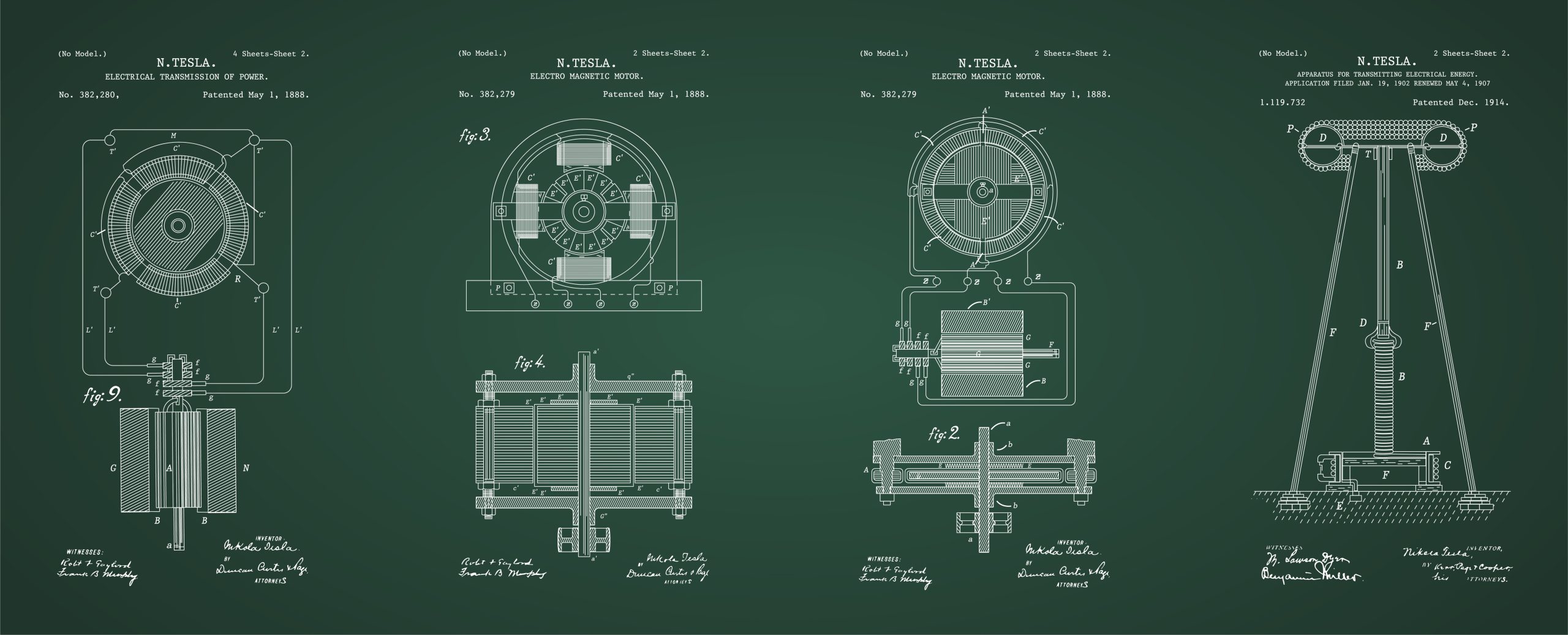
The tesla is the International System of Units (SI) for the magnetic field. The unit of measure is named after renowned inventor and electrical engineer, Nikola Tesla. It represents the force experienced by a one-meter-long wire carrying a current of one ampere in a vacuum. It is the unit of choice in most scientific and engineering contexts.
The gauss is named after mathematician and physicist, Carl Friedrich Gauss. It is not an SI unit, and magnitudes weaker. One tesla = 10,000 gauss and is sometimes used to represent fields that are weaker than 1 tesla. The SI unit for lower fields, however, is the microtesla (µT).
The units of measure allow us to be consistent when describing magnetic field strengths of all magnitudes. A strong refrigerator magnet is 100 gauss or 0.01 teslas. A standard hospital MRI is about 1.5 teslas, or 15000 gauss. The Earth’s magnetic field is approximately 25 to 65 microteslas (µT). The strongest continuous magnetic field in the world clock’s in around 45 tesla.